Sydney AI Meetup
Sydney AI Meetup — Symposium 2025
24 November 2025
The University of Sydney
The University of Sydney
Sydney AI Meetup is an organization that brings together HDR students, researchers, academic staff, and industry professionals in the AI community across greater Sydney, extending to Australia and international AI communities.
Through monthly seminars and recurring symposia, we create a platform for substantive, tech-oriented discussion, new partnerships, and opportunities for joint research and industry internships — driving innovation and knowledge exchange in AI.
Join the LinkedIn Community →Size A0 (841 × 1189 mm), portrait orientation. White background with black text recommended for readability and visual presentation.
| 8:00-8:40 | Registration | |
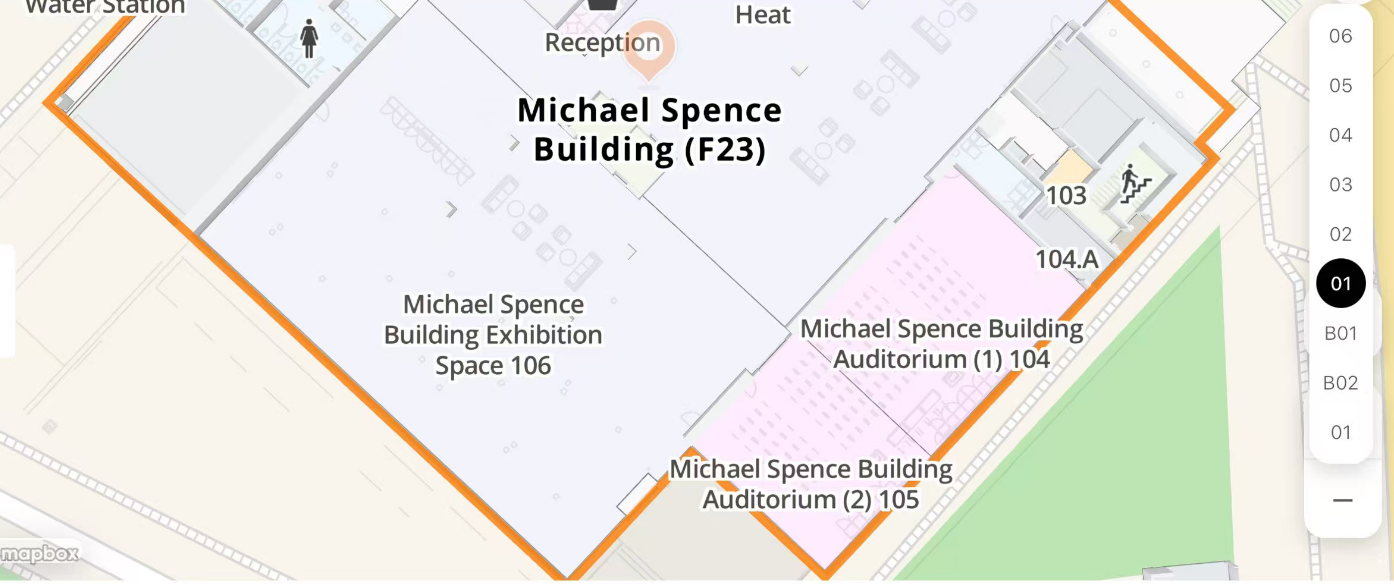
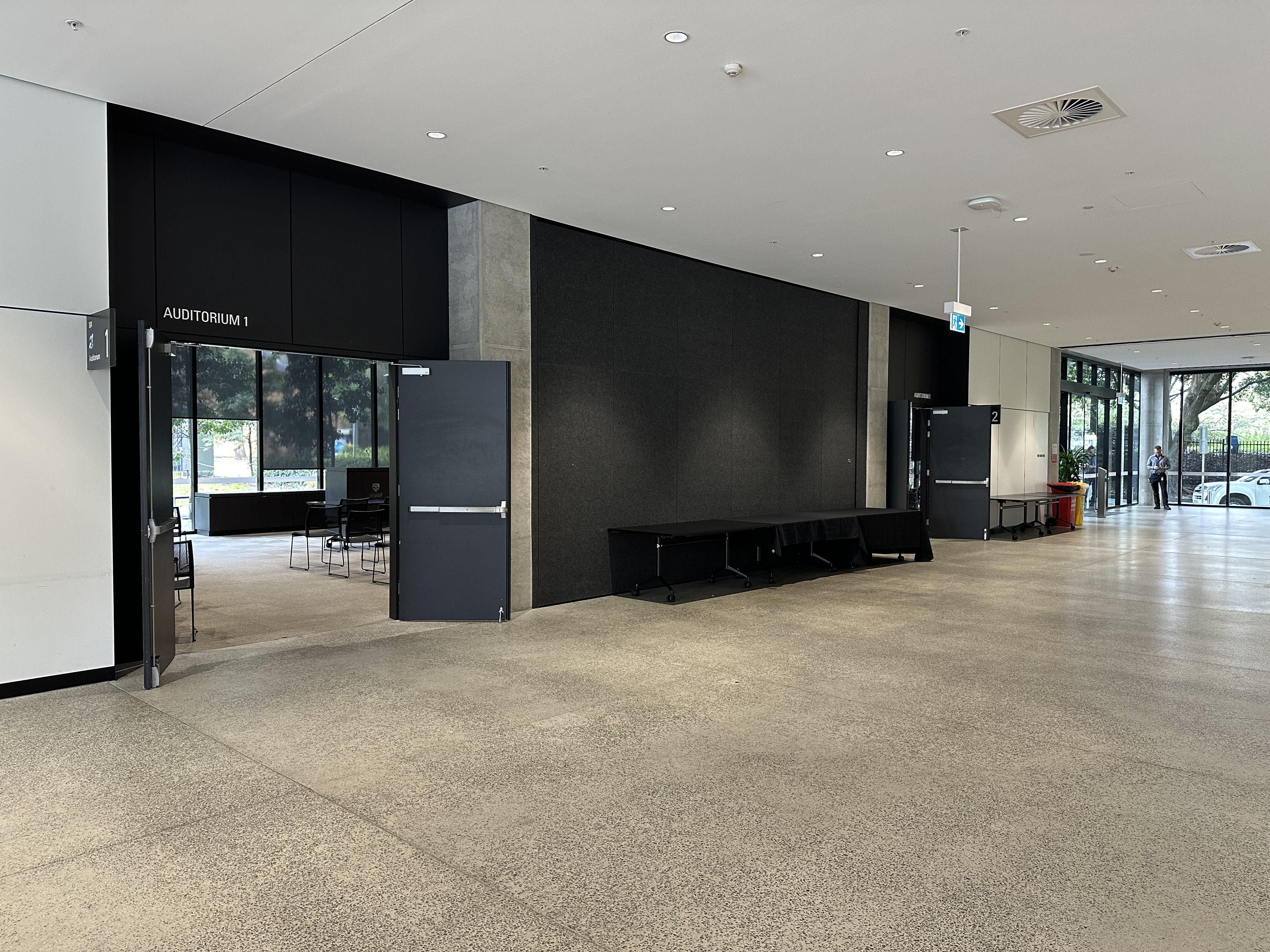
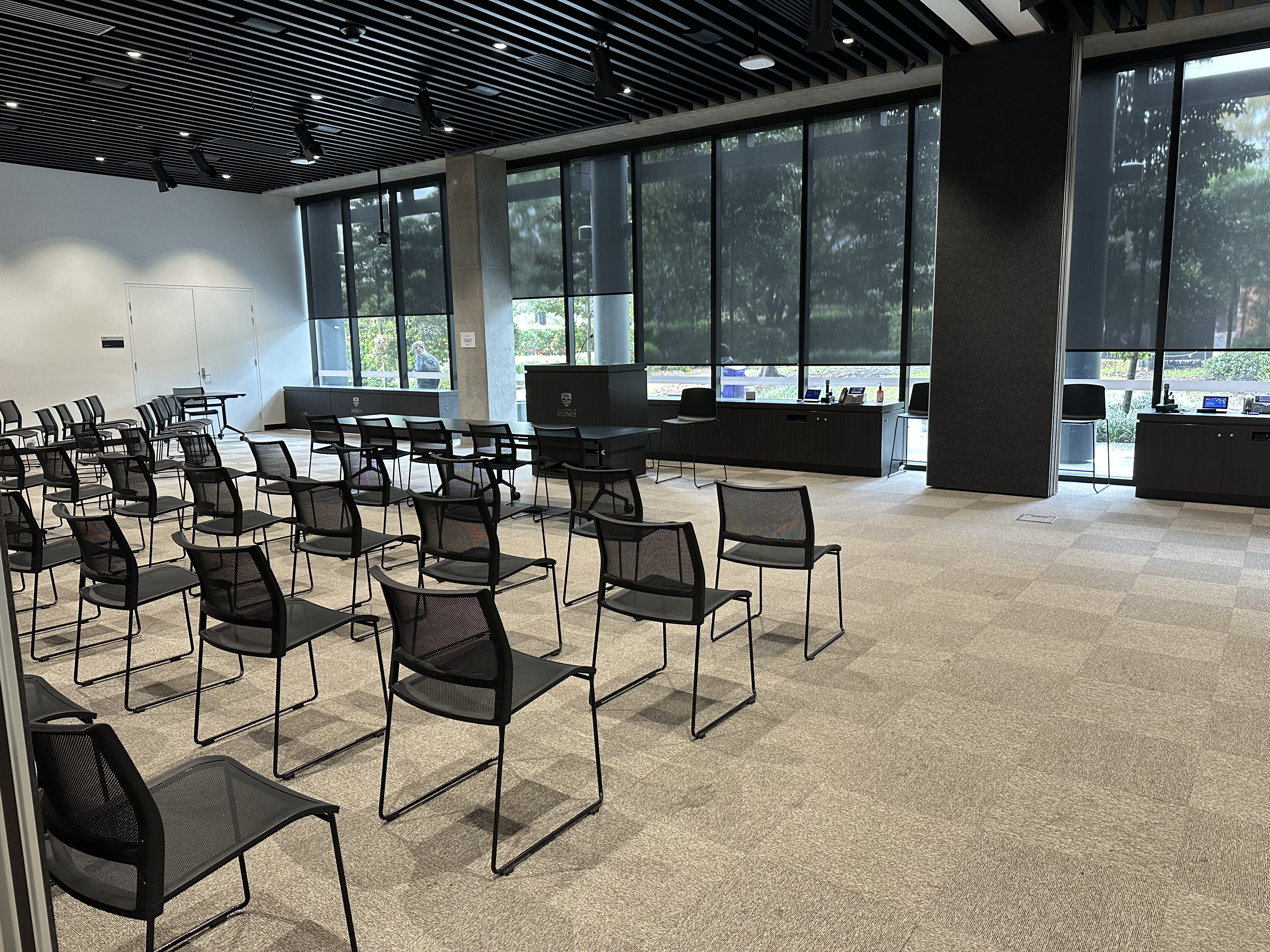
| Location for Talks: F23.01.104 & F23.01.105 | ||
| 8:40-8:50 | Opening Remark A/Prof Chang Xu (USyd), Prof Lei Wang (UoW) |
|
| 8:50-9:00 | Welcome Speech Prof David Lloyd-Davies, 1st Secretary/ Head of Science & Tech, British High Commission Canberra |
|
| 9:00-9:45 | Resolution-Agnostic Learning: Neural Operators That Scale [Slides] Abstract: Neural Operators learn mappings between functions—for example, from boundary or forcing inputs to full solution fields—enabling resolution-agnostic surrogates that run in real time and scale to 3D. This talk introduces the operator-learning paradigm and why it differs from standard pointwise regressors: mesh independence, parameter sharing across resolutions, and generalization to unseen inputs and geometries. I’ll survey core models—DeepONet and the Fourier Neural Operator (FNO)—and then focus on recent advances from our group: Siren-FNO, which augments Fourier layers with sinusoidal activations to recover high-frequency structure and sharp interfaces, and tensorized FNOs such as TT-FNO, which factorize Fourier layers for large memory/parameter savings without sacrificing accuracy. Empirically, these variants improve sample efficiency, capture fine scales more faithfully, and reduce inference latency, making them practical surrogates for complex simulations. I’ll close with a pragmatic checklist—multi-resolution training, normalization, boundary handling, batching on large grids, and evaluation beyond RMSE (spectral error, conservation)—plus short application vignettes from fluid and materials modeling. Attendees will leave with a clear mental model of operator learning, guidance on when to use FNO-style architectures, and actionable tips for deploying scalable, resolution-agnostic surrogates in real pipelines. |
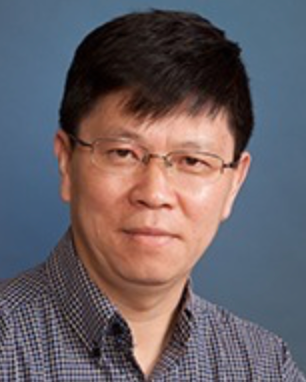
Prof. Junbin Gao |
| 9:45-10:30 | Research Philosophy with some case studies in AI Security [Slides] Abstract: In this talk, I will outline my research philosophy with a particular focus on how to produce high-quality research that is both publishable in reputable venues and capable of generating meaningful real-world impact. I will illustrate this through selected examples of my work in the field of AI Security—a rapidly emerging interdisciplinary domain that lies at the intersection of artificial intelligence and cybersecurity. AI Security has become increasingly vital as AI systems are now deeply embedded in critical infrastructure, decision-making processes, and everyday technologies. As such, the integrity, safety, and resilience of these systems are essential not only for technological advancement but also for social well-being. By showcasing research conducted in this area, I will highlight how academic contributions can influence industry practices, policy discussions, and public trust in AI-driven solutions. Beyond technical insights, this talk will also address a broader question often faced by emerging researchers: How does one strategically navigate the research landscape to ensure that their scholarly work benefits society? I will discuss practical approaches for building a coherent research agenda, aligning with impactful research directions, and contributing to knowledge that extends beyond publications to create tangible societal value. Ultimately, this talk aims to inspire thoughtful, responsible, and strategically positioned research that not only advances academic knowledge but also serves the greater good. |
Prof Willy Susilo |
| 10:30-11:00 | Tea Break (Overlap with Poster and Demonstration Session below) | |
| Location for Poster: F23.01.106 | ||
| 10:30-12:00 | Morning Poster Session 01. Zhiwei Li (UTS), Federated Vision-Language-Recommendation with Personalized Fusion, AAAI 2025 02. Maryam Alarfaj (UTS)Agentic AI for Blue Carbon Projects Management , Unpublished 03. Guanghao Wu (UTS)Anti-Collusion Learning for Multi-Agent Market Making: Metrics, Mechanisms, and PSRO-Regularized Training , ICML 2025 04. Huilin Gu (UTS)Data-driven analytics for student reviews in China’s higher vocational education MOOCs: A quality improvement perspective , PLOS One 05. Zijian Wang (USyd) ThoughtProbe: Classifier-Guided LLM Thought Space Exploration via Probing Representations , EMNLP 2025 06. Toan Nguyen (UNSW) Bisecle: Binding and Separation in Continual Learning for Video Language Understanding , NeurIPS 2025 07. Zechen Li (UNSW) SensorLLM: Aligning Large Language Models with Motion Sensors for Human Activity Recognition, EMNLP 2025 08. Md Mahmudul Hasan (UNSW) OCT-based diagnosis of glaucoma and glaucoma stages using explainable machine learning, Scientific Reports 09. Dipankar Srirag (UNSW) Predicting the Target Word of Game-playing Conversations using a Low-Rank Dialect Adapter for Decoder Models, NAACL 2025 10. Md Hasnat Riaz (UNSW) Deep Learning Approaches for Automated Glaucoma Detection and Staging Using Multimodal Imaging Data, ARVO 2025 11. Hassan Ali (UNSW) Adversarially Guided Stateful Defense against Backdoor Attacks in Federated Deep Learning, ACSAC 2025 12. Liyao (USyd) On Geometry-Enhanced Parameter-Efficient Fine-Tuning for 3D Scene Segmentation, NeurIPS 2025 13. Xin (UNSW) DyMO: Training-Free Diffusion Model Alignment with Dynamic Multi-Objective Scheduling, CVPR 2025 14. Fatemeh Aminzadeh (UTS), SAFAARI: Contrastive Adversarial Open-Set Domain Adaptation for Single-Cell Data Integration and Cell Type Annotation, GPBJ 15. Angela Pierides (UTS), AI-Driven Platelet Morphology Analysis for Thrombosis , Unpublished 16. Mingfei Lu (UTS), Predict and Explain: A Unified Approach to Citation Impact Forecasting, ICML Workshop 17. Björn Eriksson (UTS), Unfolding AI in fashion: More-than-human fashion practice enhanced by Artificial Intelligence, HVCC 18. Shakyani Jayasiriwardene (USyd), More Than Words: The Impact of Voice Assistant Personality Traits on Failure Mitigation, IMWUT Journal 19. Xiu-Chuan Li (USyd), Efficient and Trustworthy Causal Discovery with Latent Variables and Complex Relations, ICLR 2025 20. Karunasingha Gedara (UNSW), SoK: AI Support for Analyst Situation Awareness in Security Operation Centres, ESUS 2025 21. Mehdi Jafari (UNSW), Beyond Words: Integrating Theory of Mind into Conversational Agents for Human-Like Belief, Desire, and Intention Alignment, ACL Findings 22. Ruilin Tong (UNSW), Model Inversion with Layer-Specific Modeling and Alignment for Data-Free Continual Learning, NeurIPS 2025 23. Md Mamunur Rahaman (UNSW), Leveraging Vision-Language Embeddings for Zero-Shot Learning in Histopathology Images, BHI 2025 24. Dipankar Srirag (UNSW), BESSTIE: A Benchmark for Sentiment and Sarcasm Classification for Varieties of English, ACL Findings 2025 25. Devin Yuncheng Hua (UNSW), Boosting Resilience of Large Language Models through Causality-Driven Robust Optimization, NeurIPS 2025 |
|
| 12:00-13:30 | Lunch Provided | |
| Location for Talks: F23.01.104 & F23.01.105 | ||
| 13:30-14:15 | How do we get the benefits of LLMs without causing long-term harm? [Slides] Abstract: Large language models (LLMs) are increasingly being adopted to support writing tasks, but their long-term implications are only just starting to be understood. While many studies have found LLMs can have a positive impact on writing quality and productivity, they can also decrease feelings of ownership, decrease cognitive engagement, decrease population-diversity, and may result in deskilling or less meaningful work. There are also societal implications to worry about, like large energy demands, corporate capture and control, and bias. In this talk, I will present two lines of work that attempt to understand how we can gain the benefits of LLMs without succumbing to their faults. In the first, I'll present work on how AI-supported writing results in decreased feelings of ownership and what this might imply, especially in the context of writing education. In the second, I'll present work on how writers feel about the use of their work as training data, and how we might build data collectives in which creative communities come together to train their own language models. Such language models may be considered "vegan" -- adhering to the highest ethical standards. |
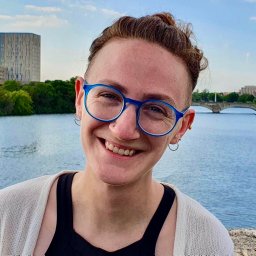
Dr Katy Gero |
| 14:15-15:00 | AI in Australia: Meeting the Moment or seeing it pass by? Abstract: Australia has a once-in-a-generation chance to turn its natural strengths into sovereign, sustainable AI capability. Our abundant renewables, world-class datasets, strong research and geopolitical stability give Australia a unique edge for low-emissions (sustainable) compute, yet, without public leadership, we risk “renting” our digital future from offshore providers amid record foreign data-centre spend. To own our future will require bold public investment in nation-building digital infrastructure that secures productivity, resilience, and strategic autonomy, keeping value and standards onshore while partnering globally where it serves the public interest. |
Prof. Sue Keay, UNSW |
| 15:00-15:30 | Tea Break (Overlap with Poster and Demonstration Session below) | |
| Location for Poster: F23.01.106 | ||
| 15:00-16:30 | Afternoon Poster Session 01. Siyu Zhou (UTS), WALL-E: World Alignment by NeuroSymbolic Learning improves World Model-based LLM Agents, NeurIPS 2025 02. Jin Li (UTS), Revealing Multimodal Causality with Large Language Models, NeurIPS 2025 03. Zhuo Cai (UTS), Unleashing the Potential of Diffusion Models Towards Diversified Sequential Recommendations, SIGIR 2025 04. Maryam Asgari (UTS), Scaling Graph Neural Networks (GNN) for Real-Time Modeling of Network Behaviour, ACM SIGCOMM 05. Borooj ALshafai (UTS), Social Carbon Impact Estimation: Toward AI-driven approaches for computing Social Carbon Impact, Under Review 06. Amanda Denham (UTS), Consumer Perceptions of Artificial Intelligence (AI) in Mortgage Lending Decisions in Australia, Unpublished 07. Lihua Wang (UNSW), VAlign-GLAR: Graph Retrieval-Based Vulnerability Intelligence Alignment via Structured LLM-Guided Inference, CCS-LAMPS 08. Calvin D’Couto (UTS), SDTP-ViT: Vision Transformers Based Obstruction Classification in Telecommunication Pipes, ICIEA 2025 09. Bushra (UTS), Data Governance Nd knowledge graph, Unpublished 10. Muntasir Rubayet (UTS), Artificial Intelligence Design Advancements: The Role of AI in Architectural Design, ICPACE 11. Chen Chen (USyd), Enhancing Privacy-Utility Trade-offs to Mitigate Memorization in Diffusion Models, CVPR 2025 12. Chuanzhi Xu (USyd), Towards End-to-End Neuromorphic Voxel-based 3D Object Reconstruction Without Physical Priors, ICME 2025 13. Muhammad Umair (USyd), Detecting Fake Images on Social Media, ICWS 2025 14. Huan Wang (UoW), FedDifRC: Unlocking the Potential of Text-to-Image Diffusion Models in Heterogeneous Federated Learning, ICCV 2025 15. Ruilin Tong (UNSW), Coreset selection via reducible loss in continual learning, ICLR 2025 16. Zailong Chen (UoW), Enhancing Radiology Report Generation via Multi-Phased Supervision, IEEE TMI 2025 17. Tinghui Li (USyd), Estimating the Effects of Encumbrance and Walking on Mixed Reality Interaction, CHI 2025 18. Tinghui Li (USyd), Weight-Induced Consumed Endurance (WICE): A Model to Quantify Shoulder Fatigue with Weighted Objects, UIST 2025 19. Inoj Neupane (WSU), Wi-Fi RSS Fingerprinting Based Indoor Localization In Large Multi-floor Buildings, Unpublished 20. Peizhen Li (MQ), UGotMe: An Embodied System for Affective Human-Robot Interaction, ICRA 2025 21. Chengkai Huang (MQ), Listwise Preference Diffusion Optimization for User Behavior Trajectories Prediction, NeurIPS 2025 22. Xiaoxiao Chi (MQ), Reference Recommendation Based Membership Inference Attack Against Hybrid-Based Recommender Systems, AAAI 2026 23. Wangli Yang (UoW), Defensive Dual Masking for Robust Adversarial Defense, CL |
|
| 16:30-18:00 | Industry-Academia Networking Event 1. Accelerating Science with NVIDIA Intro: NVIDIA’s ecosystem of tools and models enables researchers to push the boundaries of science. For instance. frameworks like NeMo and PhysicsNeMo, leveraging CUDA and GPUs, facilitate large-scale model development for language and physics-informed simulations, while Omniverse and Isaac and Cosmos deliver breakthroughs in simulation, digital twins and robotics. The talk will provide an overview of the accelerated tools for scientific research as well as the programs available to support researchers. 2. From token to discovery: A new paradigm in physical science Intro: The traditional path of physical science— guided by intuition, trial-and-error, and incremental progress — is increasingly inadequate in the face of the urgent demands posed by next-generation renewable technologies. In this seminar, I will present a new paradigm, “From Token to Discovery,” that reconceptualizes materials research as a language problem: by teaching large language models to encode and reason over the symbolic, structural, and procedural knowledge of physical science like chemistry, we can translate multimodal data into actionable scientific insight. This approach unifies generative AI, computational simulation, autonomous experimentation, and closed-loop optimization into a single pipeline, enabling predictive materials design, synthesis route generation, and iterative validation at unprecedented speed. The result is a fundamental shift from observational science to generative science — one where materials are not merely discovered but invented by design. 3. Histopathology AI: The needle in a haystack problem Intro: Digital histopathology images are at gigapixel-scale with vast amounts of visual data among which are tiny anomalous areas. Some are benign, others mark precancerous regions that require monitoring, while still others indicate cancer that requiring patient management. The context and spatial location of these anomalies within the gigapixel image are crucial; for example, cancer in proximity to nerves or vasculature poses a higher risk of spreading. Therefore, AI systems must simultaneously detect very small anomalies and interpret the context surrounding each to accurately assess the diagnosis. This talk will summarise the prediction task and provide an overview of other challenges such as data transfer, computational resource utilisation, and prediction turn-around-time, factors that are critical for making a meaningful clinical impact when deploying AI in pathology workflows. An additional layer of complexity is posed by regulatory review, as navigating approvals and compliance with medical device regulations is essential for AI tools to reach clinical practice. By successfully addressing these challenges, AI tools can make a positive impact to millions of lives. | 1. Dr Johan Barthelemy 2. Dr Tong Xie 3. Dr Ashnil Kumar |
Dr Junbin Gao is Professor of Big Data Analytics at the University of Sydney Business School. Prior to joining the University of Sydney in 2016, he was Professor in Computing from 2010 to 2016 and Associate Professor from 2005 to 2010 at Charles Sturt University (CSU). He was Senior Lecturer from Jan 2005 to July 2005 and Lecturer from Nov 2001 to Jan 2005 in the School of Mathematics, Statistics and Computer Science (now the School of Science and Technology) at University of New England (UNE). Between 1999 and 2001, he worked as a Research Fellow in the Department of Electronics and Computer Science at University of Southampton, England. Until recently his major research interest has been machine learning and its application in data science, image analysis, pattern recognition, Bayesian learning & inference, and numerical optimization etc. He is the author of 260 academic research papers and two books. His recent research has involved new machine learning algorithms for big data in business. Prof Gao won two research grants in Discovery Project theme from the prestigious Australian Research Council (ARC).
Dr Willy Susilo is a Distinguished Professor and Australian Laureate Fellow at the School of Computing and Information Technology, UOW. He is a Fellow of several academies: IEEE, IET (Institution of Engineering and Technology) Fellow, ACS (Australian Computer Society), AAIA and AIIA. He was awarded a prestigious ARC Australian Laureate Fellowship in 2023. He is the director of Institute of Cybersecurity and Cryptology (iC2), School of Computing and Information Technology, University of Wollongong. Willy is an innovative educator and researcher. Currently, he is the Head of School of Computing and Information Technology at UOW (2015 - now). Prior to this role, he was awarded the prestigious Australian Research Council Future Fellowship in 2009. He was the former Head of School of Computer Science and Software Engineering (2009 - 2010) and the Deputy Director of ICT Research Institute at UOW (2006 - 2008). He is the Editor in Chief of the Computers Standards and Interface (Elsevier) and Information (MDPI) journal. He has served as an Associate Editor in IEEE Transactions in Information Forensics and Computing and he is currently serving as an Associate Editor in IEEE Transactions in Dependable and Secure Computing.
Dr Katy Gero is a Lecturer in the School of Computer Science at the University of Sydney, previously a Postdoctoral Fellow at Harvard University with Elena Glassman and the Library Innovation Lab, and earned her PhD from Columbia University in 2022 under Lydia Chilton. She is a human-computer interaction researcher focused on creativity, writing assistants, and the ethics of AI. Her work explores how writers use language models and how these technologies affect ownership, agency, and learning. Supported by an NSF Graduate Research Fellowship, the Brown Institute for Media Innovation, and an Amazon Research Award, Katy is also a poet and essayist. Her debut poetry collection, The Anxiety of Conception (Nothing to Say Press, 2025), follows recognition as a Brooklyn Poets Fellow, CultureHub Resident Writer, and Vermont Studio Center Resident. A former MIT mechanical engineering student and Carl G. Sontheimer Prize recipient, she worked on soft robotics and at startups Rest Devices and Soofa.
Dr Sue Keay is an expert in robotics, AI and automation. She is the Director of the UNSW AI Institute and founded Robotics Australia Group, the peak body for the robotics industry. With a background in science and a passion for cutting-edge technologies, Sue has led successful initiatives that bridge the gap between research and practical applications. Her expertise lies in leveraging robotics, AI and automation to solve complex challenges across various sectors. Sue is a fellow of the Australian Academy of Technology and Engineering (ATSE), a member of the Kingston AI Group and Chief Executive Women, and serves on numerous advisory boards, including the board of the computer vision start-up, Visionary Machines. Sue holds an MBA from The University of Queensland Business School, a PhD in Earth Sciences from ANU and is a Graduate of the Australian Institute for Company Directors.
Dr. Johan Barthelemy is passionate about applied research, intelligent video analytics, and deploying AI in embedded systems. He previously led SMART’s Digital Living Lab, conducting research on AI and edge computing for internet-of-things applications (AIoT). Dr. Barthelemy has also developed large agent-based simulations for high-performance computing facilities. He is part of the Strategic Researcher Engagement team at NVIDIA.
Dr Tong Xie gained his PhD from the School of Photovoltaic and Renewable Energy Engineering, UNSW Sydney, acclaimed as one of Australia’s National Computational Infrastructure’s Top 10 HPC AI-Talents. As the CEO of GreenDynamics and the Group Lead of UNSW AI4Science, he is pioneering the use of Generative AI to accelerate the discovery and development of sustainable materials globally . His expertise extends to Machine learning, Natural Language Processing and Material Science. He also founded the DARWIN (world first physical science LLM), demonstrating his innovative approach to advancing AI in material science.
Dr Ashnil Kumar is a computer scientist dedicated to advancing technological innovation in healthcare, making impactful solutions accessible to clinicians and patients. As Lead Machine Learning Engineer at harrison.ai, he leads multidisciplinary teams and drives the development of AI-powered histopathology tools. Formerly a Lecturer at the School of Biomedical Engineering at the University of Sydney and Assistant Deputy Director at the ARC Training Centre for Innovative BioEngineering, his research spans machine learning, medical image analysis, and digital health. Dr Kumar is an impactful researcher, developer of practical AI tools, and an enthusiastic mentor committed to bridging the gap between research and real-world healthcare applications.









In alphabetical order
For enquiries about the symposium or future events, reach out to one of the organizing committee.